
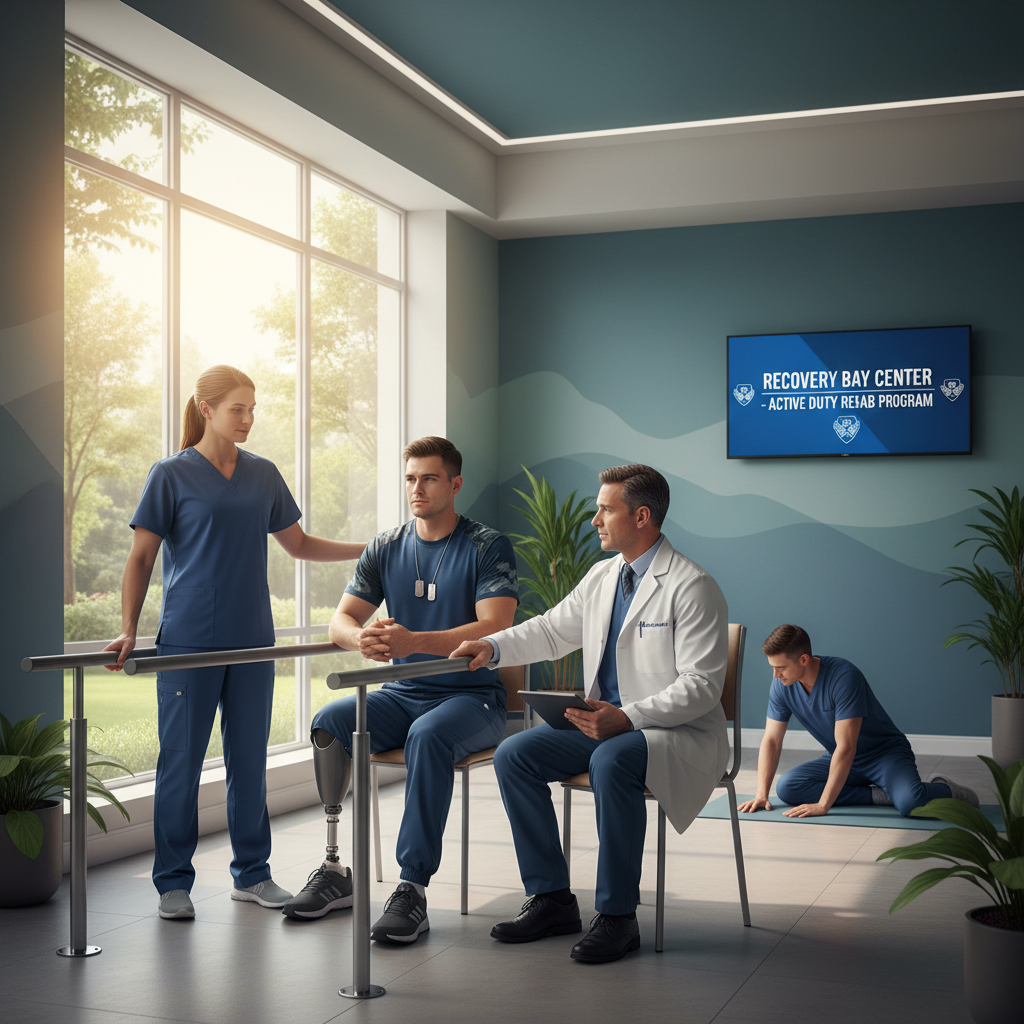
Why inpatient rehab for active duty military is different
If you are considering inpatient rehab for active duty military service members or veterans, you are likely facing more than substance use alone. Military life exposes you to chronic stress, trauma, and a culture that often expects you to push through pain in silence. These pressures can increase the risk of substance use, especially when alcohol or drugs become a way to cope with memories, sleep problems, or physical pain [1].
Inpatient rehab for active duty military and veterans is designed with these realities in mind. You are not treated as a generic patient. Instead, your treatment team recognizes the demands of service, the impact of deployments, and the importance of chain of command and accountability. A structured, residential setting gives you time and space to stabilize, heal, and rebuild your life without the constant triggers of your everyday environment.
At a specialized military rehab program for men like Recovery Bay Center, you live in a community of other men who understand the language, values, and challenges of service. This sense of brotherhood, combined with evidence-based care, helps you move from survival mode into sustainable recovery.
What to expect in inpatient military rehab
When you enter inpatient rehab for active duty military or veteran men, you join a 24/7 therapeutic environment where every part of your day is structured to support your recovery. This structure can feel familiar because it mirrors aspects of military life. You follow a schedule, are part of a team, and are held accountable for your actions.
You can typically expect:
- A residential stay, often 30, 60, or 90 days, especially for more severe addictions or co-occurring PTSD and depression [1]
- 24/7 support from nurses, therapists, and support staff
- Individual therapy to address trauma, guilt, grief, and stressors tied to service
- Group therapy focused on camaraderie, peer support, and shared military experience
- Daily routines around meals, sleep, movement, and personal responsibility
VA facilities, such as the Central Arkansas Veterans Healthcare System, offer residential programs that show what this level of care can look like. Programs there provide structured 28‑day substance use disorder treatment, 8‑week PTSD-focused residential care, and specialized rehabilitation for homeless veterans, all supported by psychiatrists, psychologists, nurses, social workers, and therapists [2]. Although Recovery Bay Center is a private program, your experience of structure and multidisciplinary care is similar, with a focus on your specific needs as a male service member or veteran.
If you have already completed detox, a structured rehab program for veterans provides the next step. Detox clears substances from your body, but residential treatment helps you relearn how to live without them.
How structure and discipline support your recovery
Military culture is built on routine, expectations, and accountability. When addiction takes hold, those same strengths can feel like they are slipping away. In inpatient rehab for active duty military and veterans, you use those familiar concepts to your advantage.
Rebuilding daily routines
You follow a set daily schedule that includes therapy, meals, recreation, and rest. Over time, this routine helps you:
- Re-train your body and mind to function without substances
- Stabilize your sleep and eating patterns
- Practice consistency and follow-through in a safe environment
Instead of drifting through the day, you know where you need to be and why you are there. Your schedule becomes a tool for stability instead of a burden.
Restoring personal accountability
Addiction often leads to missed obligations, fractured trust, and broken promises. In a veteran inpatient treatment program, you work within a clear structure of expectations and consequences. You are encouraged to:
- Take ownership of your choices
- Speak openly about setbacks instead of hiding them
- Rebuild integrity through small, consistent actions
This approach mirrors the accountability you knew in service but is grounded in compassion and recovery instead of punishment or shame.
Dual treatment for alcohol and drug use
Many service members and veterans do not struggle with only one substance. You might use alcohol to calm down at night and stimulants to push through the day. You might have a prescription medication that has become difficult to control, along with heavy weekend drinking.
Dedicated alcohol and drug rehab for veterans recognizes that your addiction might be complex. Inpatient rehab for active duty military populations usually includes:
- Medically managed detox when needed, with careful monitoring
- Medication-assisted treatment (MAT) for alcohol and opioid use disorders, such as methadone or buprenorphine, when clinically appropriate [3]
- Behavioral therapies that address cravings, triggers, and the reasons you turned to substances in the first place
VA and Department of Defense guidelines now support FDA-approved medications for opioid use disorder like methadone and buprenorphine for active duty service members [3]. Although many veterans still do not receive these medications due to stigma or lack of information, specialized inpatient programs are working to close that gap.
At Recovery Bay Center, your treatment plan can address both alcohol and drug use at the same time. This comprehensive approach reduces the risk that you stop one substance only to substitute another.
Trauma-informed care for PTSD and mental health
For many men in uniform, trauma is not a single event. It might be a deployment, a series of missions, a training accident, or long stretches of hypervigilance that never fully turn off. These experiences can leave you with nightmares, flashbacks, irritability, and emotional numbness. When these symptoms go untreated, it is common to lean on substances to cope.
Inpatient rehab for active duty military and veterans must address both trauma and substance use. This is often called a dual diagnosis or co-occurring disorders approach. Programs like those at Longbranch Recovery & Wellness Center and Recovery Centers of America emphasize integrated treatment for depression, anxiety, PTSD, and addiction in military populations [4].
In a trauma-informed setting, you can expect:
- Therapists who understand military culture and the impact of combat or service-related trauma
- Evidence-based therapies that address both safety and emotional regulation, such as Seeking Safety and cognitive behavioral approaches
- A pace that respects your readiness, without pushing you to share details before you feel prepared
The VA’s residential PTSD programs show how powerful this level of care can be, combining evidence-based therapies with occupational and recreational activities to rebuild life skills and improve quality of life [2]. At a private men’s military rehab center like Recovery Bay Center, you receive similar integrated support within a smaller, male-only community.
Brotherhood, camaraderie, and a male-only environment
One of the strongest healing forces in inpatient rehab for active duty military is the sense of brotherhood. You are surrounded by other men who have faced similar pressures, expectations, and losses. You do not have to spend time translating your experience, because the men around you already understand the language of military life.
Programs such as the RESCU initiative at Recovery Centers of America highlight how powerful this kind of community can be. Their military-focused inpatient rehab builds camaraderie among veterans and service members while honoring core values like duty, honor, and discipline [5].
At Recovery Bay Center, a veteran rehab program for men offers similar advantages:
- You are encouraged to drop the “tough it out” mask and talk honestly
- Group sessions focus on trust, mutual support, and accountability
- You rebuild a sense of belonging that does not depend on substances
For many men, this brotherhood becomes one of the most important parts of long-term recovery. The bonds you form in a veteran men’s residential treatment setting often continue after discharge, giving you a sober support network that understands your path.
When you are used to relying only on yourself, discovering a community of men who have walked the same road can be one of the most powerful shifts in recovery.
How inpatient rehab fits after detox
If you have already completed detox, or are preparing for it, you may wonder what comes next. Detox is an essential step but it only clears substances from your body. It does not rebuild your coping skills, relationships, or sense of purpose.
Transitioning from detox directly into inpatient rehab for active duty military and veterans creates continuity of care. You do not go home and hope for the best. Instead, you move into a residential rehab for veterans or residential alcohol rehab for veterans where you can:
- Stabilize your mood and sleep after detox
- Learn how to handle cravings and triggers
- Address the underlying causes of your addiction
- Begin repairing trust with family and loved ones
Inpatient programs within the VA system often include 3 to 4 hours of therapy per day as part of comprehensive rehabilitation services [6]. At Recovery Bay Center, a similarly intensive approach helps ensure that you are not just abstinent, but actively building a life you want to maintain.
If you came through an acute detox in a hospital or medical setting, your clinical team can coordinate with a men’s veteran addiction treatment program to support a seamless handoff into residential care.
Tricare and VA-related coverage for inpatient rehab
One of your biggest concerns may be how to pay for inpatient rehab for active duty military and veterans. The good news is that there are multiple pathways to coverage, depending on your status and benefits.
The Department of Veterans Affairs funds a wide range of inpatient and outpatient rehab services, including medically managed detox, medication-assisted treatment for opioid and alcohol addiction, and specialty mental health care for PTSD and substance use [6]. VA inpatient units like those at Hines VA Hospital and Jack C. Montgomery VA Medical Center operate 24/7 and use integrated, team-based care to support recovery [6].
For active duty members and some veterans, Tricare can cover inpatient addiction treatment when medically necessary. The 2016 expansion of Tricare added intensive outpatient programs for substance use disorder, which can support you before or after a residential stay [3].
At Recovery Bay Center, the admissions team can help you explore:
- Tricare covered rehab for military options
- How your benefits apply to a tricare inpatient rehab for veterans level of care
- Whether you qualify for additional programs such as Vocational Rehabilitation & Employment (VR&E), which can offer job training and support if you have a service-connected disability [6]
You do not have to navigate these systems alone. A dedicated team can review your coverage, explain your options in plain language, and help you move forward with treatment without unnecessary delays.
Planning for long-term recovery after discharge
Inpatient rehab for active duty military and veterans is a powerful beginning, but it is not the end of your journey. Your time in a long term rehab for veterans or shorter residential stay prepares you for life after discharge. From day one, your treatment team will help you design a realistic aftercare plan.
This plan may include:
- Ongoing outpatient therapy or intensive outpatient programming
- Peer support groups, including veteran-specific meetings
- Medication management for PTSD, depression, anxiety, or opioid use disorder
- Family counseling to rebuild communication and trust
VA programs such as the Veterans Industries Transitional Residence (TR) at Central Arkansas show how residential treatment can connect directly to work therapy and community reintegration. Their model requires at least 32 hours of weekly work therapy, helping veterans develop self-reliance and transition back into the community [2].
At Recovery Bay Center, you receive similar forward-looking support. You are not just discharged. You are guided toward the next steps that match your goals, whether that means returning to duty, transitioning to civilian life, or rebuilding your role in your family.
Is inpatient rehab the right next step for you?
If you are a male active duty service member or veteran and you recognize that substance use is affecting your health, relationships, or career, inpatient rehab for active duty military populations may be the right level of care. You might benefit especially if:
- You have tried to quit on your own and keep returning to use
- You are dealing with PTSD, depression, or anxiety along with addiction
- Your home or duty environment is full of triggers you cannot avoid
- You need the stability of 24/7 support and a structured schedule
A dedicated residential drug rehab for veterans or veteran inpatient treatment program offers more than temporary relief. It provides a place where your service is honored, your struggles are understood, and your strengths are used to build a new way of living.
If you are ready to explore your options, reach out to Recovery Bay Center’s men’s military rehab center. You can ask questions about your specific situation, insurance coverage, and how quickly you can begin treatment. You do not have to manage this alone. With the right structure, brotherhood, and trauma-informed care, recovery is possible for you.