Why residential rehab for veterans can be a turning point
If you have already pushed through detox or are white‑knuckling it on your own, you might feel stuck between wanting change and not knowing what actually works. Residential rehab for veterans bridges that gap. You step into a structured, 24/7 environment where you are not doing this alone, and where the people around you actually understand military culture, trauma, and the pressure to “hold it together.”
The U.S. Department of Veterans Affairs reports that its residential rehabilitation treatment programs provide round‑the‑clock care for substance use disorders, PTSD, depression, and other mental health challenges in a structured and supportive setting, with most veterans staying about six weeks and engaging daily in classes, counseling, and peer interaction [1]. That model of intensive support and structure is exactly what many veterans need to get stable and stay that way.
At Recovery Bay Center’s men’s military rehab program, you get that same kind of intensive residential structure, but in a private, veteran‑focused environment that is designed for men who are ready to rebuild discipline, restore a sense of mission, and reconnect with a brotherhood that has your back.
If you are comparing options for residential alcohol rehab for veterans or residential drug rehab for veterans, it is important to understand how a veteran‑specific, men‑only program can support you differently than a general facility.
How residential rehab supports veterans differently
Civilian treatment can address addiction, but it often misses the realities of military service, combat stress, and reintegration. Residential rehab for veterans is built around those realities, not in spite of them.
Addressing service‑related trauma and moral injury
Many veterans carry complex layers of trauma. That can include combat experiences, loss of fellow service members, traumatic brain injury, or moral injury from situations that conflict with your values. VA residential programs are designed to treat PTSD and related conditions with evidence‑based therapy in a 24/7 therapeutic environment [1].
In a veteran‑focused residential program like Recovery Bay Center, your treatment team understands:
- Hypervigilance and sleep issues that make typical group settings difficult
- Guilt, shame, and anger tied to specific missions, deployments, or leadership failures
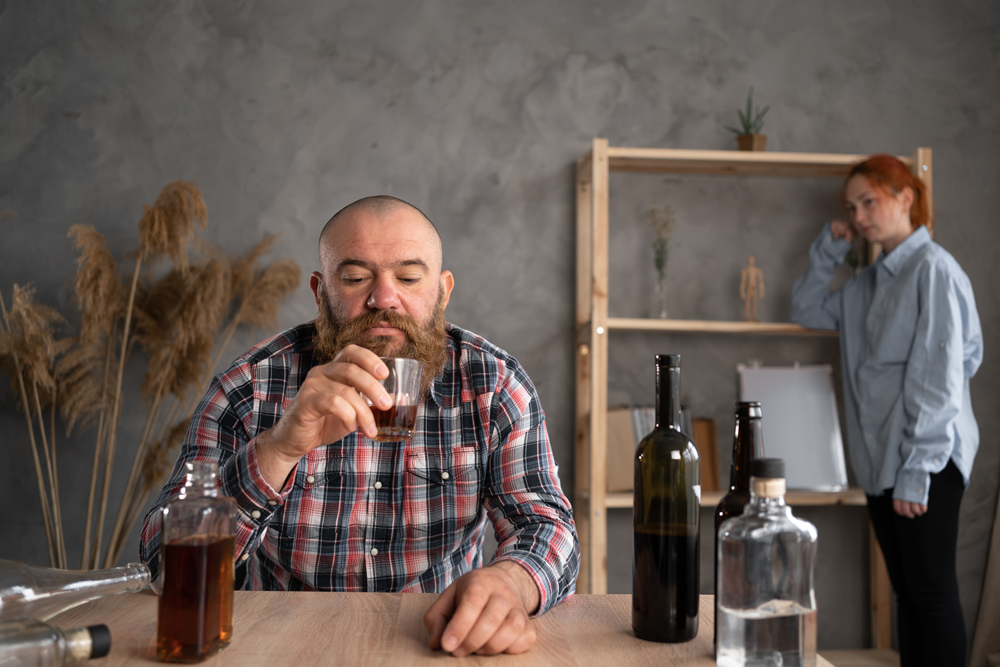
- The way alcohol or drugs become a “tool” to shut down intrusive memories or numb out
You are not asked to explain why certain triggers hit harder for you. Staff are trained to expect them, and to help you process them in ways that preserve your dignity and respect your service.
Structured environment that feels familiar
Residential rehab for veterans works because it brings back something you already know how to use: structure. VA residential rehab programs offer a full daily schedule of therapeutic and recovery‑focused activities, with constant access to clinical support [1].
At Recovery Bay Center, your day is intentionally organized. You wake up at a set time, follow a consistent schedule, and engage in:
- Individual therapy focused on your substance use and mental health
- Group sessions with other military men
- Skills‑based groups that build coping tools and relapse‑prevention plans
- Physical activity and wellness practices that help regulate your body
If you respond well to clear expectations, accountability, and a defined routine, this kind of structured rehab program for veterans gives you the framework you need to stay focused and move forward.
Continuity of care after detox
Detox is only the first step. The VA’s residential rehab data shows that veterans can need several weeks or longer in a structured setting to stabilize, work through mental health issues, and lay foundations for long‑term recovery [1].
If you have already completed medical detox, stepping directly into a residential program prevents you from falling back into old patterns. Recovery Bay Center’s men’s military program is designed as that next critical phase, so you do not have a gap between getting physically sober and doing the deeper work of staying sober.
What to expect in a men’s military rehab program
Knowing what your days will look like can make entering treatment less overwhelming. A men‑only, veteran‑focused program combines addiction treatment, trauma‑informed care, and the kind of camaraderie you may have been missing since you left active duty.
Daily structure and therapeutic schedule
In a typical day at a veteran men’s residential treatment program, you can expect:
-
Morning routine and check‑ins
You start with basic self‑care, a morning meeting, and goal setting for the day. This sets the tone and gives you a chance to say what you need or where you are struggling. -
Individual and group therapy
You meet one‑on‑one with your therapist to work on personal history, triggers, and relapse risks. Group sessions focus on shared experiences, skill building, and peer support. Serving alongside other men who “get it” makes it easier to stay honest. -
Skills, education, and wellness
Afternoons often include psychoeducation on addiction, mental health, family dynamics, and relapse prevention. You also participate in wellness activities and physical exercise that support a healthier baseline. -
Evening reflection and community
As the day winds down, you engage in evening groups, 12‑step or alternative recovery meetings, and reflection. The goal is to end the day grounded, connected, and ready to rest.
This level of predictable structure is not meant to control you. It is meant to give you enough stability to focus on healing instead of constantly managing chaos.
Integrated alcohol and drug treatment
Most men who seek alcohol and drug rehab for veterans are not dealing with just one substance. You may be mixing alcohol with pain medications, benzos, stimulants, or illicit drugs. Effective residential rehab for veterans addresses the full picture, not only the drug that brought you in.
Recovery Bay Center’s clinical team evaluates:
- All substances you have been using, including prescribed medications
- How your mental health conditions, such as PTSD or depression, interact with substance use
- Physical health concerns that may have developed over time
Treatment is then tailored so that both alcohol and drug issues are handled in the same integrated plan, rather than sending you to separate tracks.
Trauma‑informed, veteran‑aware therapy
VA residential programs emphasize evidence‑based therapies and whole‑health support for PTSD, depression, and substance use, including group counseling and tailored support activities [1]. A strong private program for veterans should offer a similar, trauma‑informed approach.
At Recovery Bay Center, you work with therapists who routinely treat:
- Combat‑related PTSD
- Military sexual trauma
- Moral injury and survivor guilt
- Anxiety, depression, and anger that may have started during service or after separation
You are not forced to disclose details before you are ready, and you are not labeled by your worst moments. Therapy focuses on helping you understand what you have been carrying, how you have been coping, and what needs to change for you to live differently.
Brotherhood and accountability
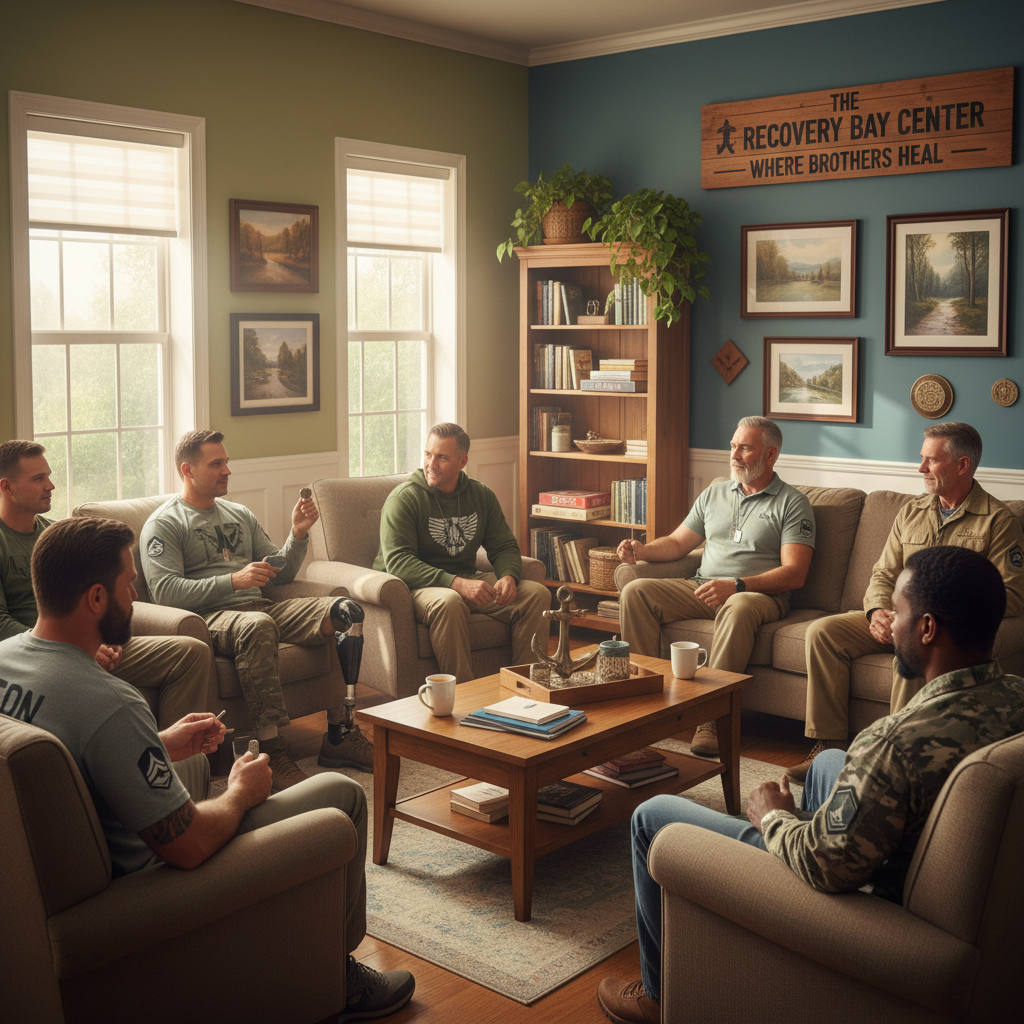
One of the most powerful aspects of a men’s military rehab program for men is the sense of brotherhood that develops. When you are in a small, veteran‑only community, you can:
- Call out other men respectfully when they are avoiding the work, and be called out in return
- Share experiences from service and transition that civilians may not understand
- Re‑learn how to trust a team, not just carry everything alone
This kind of mutual accountability is similar to what you knew in the military. Instead of using it for a mission downrange, you use it to get and stay sober.
How residential rehab improves outcomes for veterans
Residential rehab is a serious commitment of time and energy. It makes sense to ask whether it is worth it, especially if you have already tried outpatient or self‑managed recovery in the past.
Better stability, housing, and benefits
Research on veterans in structured court‑linked and treatment programs shows that when you stay engaged in a supportive, accountable process, your life stability improves. A national study of nearly 8,000 participants in Veterans Treatment Courts found that over approximately one year, veterans had a 10 percent increase in stable housing and a 12 percent increase in the number receiving VA benefits, although employment rates changed very little [2].
Those findings underscore two important realities:
- When you are supported in a structured, veteran‑specific system, you are more likely to secure housing and benefits.
- You still need targeted vocational support and rehab planning for work, especially if substances and mental health have affected your career.
A program like Recovery Bay Center is designed to help you stabilize and then connect you to appropriate resources, so your gains in sobriety transfer to life outside the facility.
Reduced health risks and increased survival
The VA reports that veterans who received residential treatment for substance use disorders in its mental health residential rehabilitation treatment programs had a 66 percent lower mortality rate within 12 months of their admission screening compared with those who did not receive that level of care [3].
That kind of statistic makes one point very clear. Intensive, residential care for substance use and co‑occurring mental health issues is not just about feeling better. It can be a life‑saving intervention.
If your drinking or drug use has already brought you to the ER, put you in dangerous situations, or pushed your body to its limits, stepping into a veteran inpatient treatment program is one of the most direct ways to reduce the risk of a fatal outcome.
Addressing homelessness, PTSD, and complex needs
The VA operates about 250 residential rehabilitation programs at roughly 120 sites across the country, serving more than 6,500 veterans and targeting issues like homelessness, PTSD, and substance use, often with specialized programs for women and those who have experienced military sexual trauma [1].
In Central Arkansas, for example, specific residential programs serve homeless veterans, provide a 28‑day substance use disorder program, and run an intensive 8‑week PTSD track that uses evidence‑based therapy plus occupational and recreational treatment to build life skills and socialization [4].
These programs show how effective residential rehab can be when it is tailored to veterans with complex needs. At Recovery Bay Center, your care plan takes into account:
- Housing instability or risk of losing your housing
- Current or past justice involvement
- Chronic illness, injuries, or disabilities
- Social isolation and estrangement from family or peers
You are treated as a whole person, not just an addiction diagnosis.
Tricare coverage and military insurance options
For many men, the biggest barrier to entering a men’s military rehab center is cost. If you are active duty, a veteran, or a military retiree, you may have more coverage than you think.
Understanding Tricare‑covered residential rehab
Tricare does cover inpatient and residential addiction treatment when it is medically necessary. That includes both alcohol and drug rehab in many cases, as part of tricare covered rehab for military members.
When you contact Recovery Bay Center, the admissions team can help you:
- Verify your Tricare or other military insurance benefits
- Determine what portion of residential care is covered
- Understand any copayments, deductibles, or authorizations required
If you are looking specifically for tricare inpatient rehab for veterans or inpatient rehab for active duty military, having a team that regularly works with military insurance makes the process simpler and less stressful.
Coordinating with VA services and community care
Many veterans receive other services through the VA, such as outpatient counseling, medication management, or medical care. The VA also runs Community Care programs that allow you to access non‑VA residential rehab services when VA resources are not available or are too distant [5].
Recovery Bay Center can help coordinate with your existing providers when appropriate, so that your residential stay fits into your overall care plan rather than competing with it.
Why choose a men’s veteran rehab program at Recovery Bay Center
Not every residential rehab is created equal. A men‑only, veteran‑focused environment offers specific advantages if you are looking for a place where your military experience is respected and understood.
Men‑only environment tailored to veterans
In a veteran men’s residential treatment program, you do not have to filter your language or experiences. You are surrounded by other military men who know the culture, the humor, and the unspoken expectations.
This setting allows you to:
- Speak openly about deployments, missions, and unit experiences
- Address masculinity, identity, and leadership issues that may be tied to your substance use
- Build trust faster, because your peers share a common background
Programs like men’s veteran addiction treatment are designed so the content, examples, and discussions are directly relevant to what you have lived through.
Discipline, structure, and restored mission
You may feel like you lost your sense of mission when you left the military, or when addiction began to call the shots. A veteran rehab program for men at Recovery Bay Center helps you reconnect with:
- Personal responsibility without shame
- Daily structure that supports physical, mental, and spiritual health
- Short‑term and long‑term goals that are realistic and meaningful
This is more than simply “following rules.” It is about rebuilding the kind of internal and external discipline that once helped you perform at a high level, and pointing it toward recovery rather than destruction.
Short‑term and long‑term residential options
Some men need a focused, shorter stay after detox. Others benefit from long term rehab for veterans that allows more time to stabilize, address trauma, and practice new skills before returning home.
Recovery Bay Center can help you:
- Determine the right length of stay for your situation
- Transition from intensive residential care to lower levels of support
- Plan for ongoing therapy, support groups, or sober housing if needed
The goal is not just to get you through residential treatment, but to set you up for sustainable recovery once you leave.
Taking the next step into residential rehab
If you are reading about residential rehab for veterans, you are likely already aware that your current path is not working. You may have tried to cut back, switch substances, or stay sober on your own. You may have been told to “just tough it out,” or to “take advantage of the VA” without clear guidance on how.
You do not have to keep doing this alone.
Recovery Bay Center’s men’s military rehab center offers a focused, disciplined, and supportive environment where you can:
- Continue healing after detox with clear structure and accountability
- Treat both alcohol and drug issues in a single, coordinated plan
- Address PTSD, depression, and other mental health concerns with veteran‑aware clinicians
- Use your Tricare or military insurance to access a level of care that can be life‑saving
If you are ready to explore a residential program that aligns with your values and your experience as a service member, reach out to Recovery Bay Center today. A confidential conversation with an admissions specialist can help you understand your options and decide whether this is the right next step for you.