Why a structured rehab program for veterans matters
If you are a veteran or active duty service member, you already know the power of structure, clear expectations, and accountability. A structured rehab program for veterans takes those same principles and uses them to rebuild your life around recovery, not around alcohol or drugs.
In a veteran focused residential setting, you are not just getting a bed and a few counseling sessions. You are entering a 24/7, mission driven environment where every part of your day is designed to support healing from substance use, PTSD, depression, and moral or combat trauma. The VA describes its residential rehabilitation programs as comprehensive, structured, and available around the clock to help you regain self care, independence, and personal responsibility [1].
At Recovery Bay Center’s men’s military rehab center, you experience that level of structure in a setting built specifically for men with military backgrounds. The result is not just sobriety. It is a full reset of your routines, your mindset, and your sense of brotherhood.
Regain structure and daily discipline
One of the biggest benefits of a structured rehab program for veterans is the return to a clear, predictable routine. Addiction thrives in chaos. Recovery thrives in structure.
Built-in schedule from wake up to lights out
In a residential environment, you do not have to figure out each day on your own. A typical veteran program uses an organized schedule that can include:
- Morning wake up and hygiene
- Set mealtimes
- Group therapy and education sessions
- Individual counseling
- Physical activity or fitness
- Skills groups, mindfulness, or recreation
- Evening reflection and quiet hours
VA residential rehab stays often run on individualized daily schedules that combine classes, counseling, peer interaction, activities, and outings [1]. At Recovery Bay Center, that same level of structure gives you something very familiar. You know where to be, what is expected, and you can focus on the work in front of you instead of fighting the chaos of everyday life.
Rebuilding your internal “chain of command”
When you have spent years operating within a tight chain of command, addiction can feel like going AWOL from your own values. A structured men’s veteran inpatient treatment program helps you:
- Relearn how to keep commitments and show up on time
- Practice following through on tasks even when you do not feel like it
- Rebuild personal discipline without the shame or punishment you may fear
This is not boot camp. The goal is not to break you down. It is to help you remember that you already know how to live by a code and then apply that to your recovery and your civilian life.
Heal in a veteran specific environment
You face experiences and triggers that most civilians will never fully understand. A general population rehab might be helpful, but it cannot always speak directly to combat stress, repeated deployments, or the culture of silence around mental health in the military.
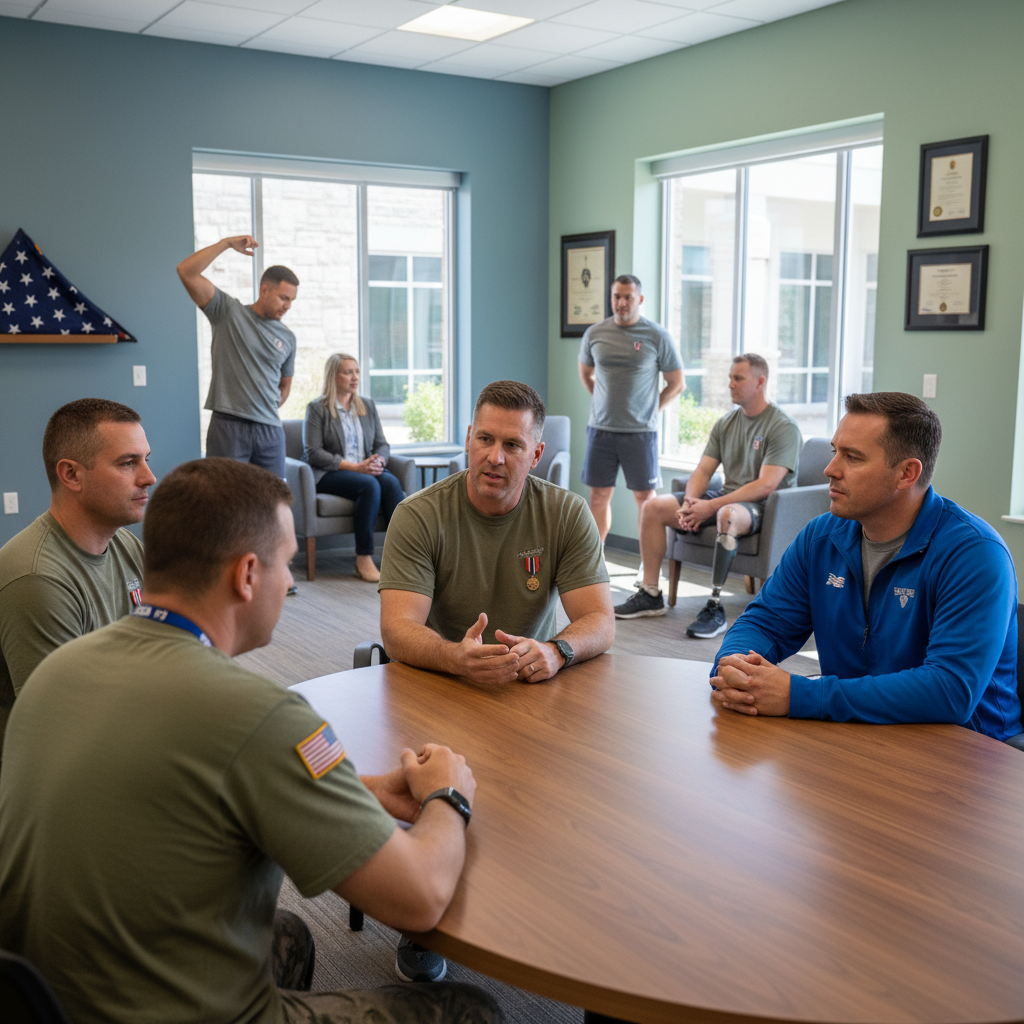
Shared military culture and language
In a men’s military rehab program for men, you are surrounded by other veterans and active duty men who understand:
- What it is like to come home and feel disconnected
- How rank, MOS, and unit culture shape your identity
- Why you may downplay symptoms or “tough it out” instead of asking for help
Residential treatment programs that specialize in veterans are designed to address your unique background and difficulties, and they have been shown to significantly improve mental health and substance use outcomes [2]. At Recovery Bay Center, you are not asked to translate your experience. You can simply speak the way you speak, with people who get it.
Trauma informed, veteran focused care
Many veterans who struggle with alcohol or drugs are also living with PTSD, depression, chronic pain, or traumatic brain injury. The VA’s residential programs offer specialized services for PTSD, co occurring conditions like chronic pain and TBI, and substance use disorders, all within the same structured setting [1].
A veteran men’s residential program should offer the same integrated approach. In a focused residential rehab for veterans, your care team takes into account:
- Combat or MST related trauma
- Sleep disturbances and hypervigilance
- Anger, irritability, or emotional numbing
- Moral injury, guilt, or shame
The goal is not only to remove substances, but to address what drove you to self medicate in the first place.
Receive dual treatment for alcohol and drug use
Many veterans do not struggle with just one substance. Alcohol may be the daily coping tool, but prescription pills, stimulants, or illicit drugs can also be in the picture. A structured rehab program for veterans should be ready to handle both.
Integrated alcohol and drug rehab
Residential treatment programs for veterans with substance use disorders provide a supportive environment that leads to significant improvements in mental health and substance use outcomes, especially when treatment is comprehensive [2]. At Recovery Bay’s alcohol and drug rehab for veterans, you can expect:
- Medically informed approaches to both alcohol and drug withdrawal after detox
- Education on how different substances affect your brain and body
- Relapse prevention planning that covers all substances you have used
If alcohol has been your main issue, a focused residential alcohol rehab for veterans can stabilize you physically and mentally. If drugs are a central part of your story, a residential drug rehab for veterans makes sure each substance is addressed safely and effectively.
Evidence based therapies that target root causes
Veteran specific residential programs frequently offer trauma focused therapies such as Cognitive Processing Therapy, Prolonged Exposure, and EMDR to address trauma that underlies substance use [2]. Combined with cognitive behavioral therapy and other evidence based approaches, you work on:
- Identifying triggers and high risk situations
- Challenging guilt, shame, and negative beliefs
- Learning new coping skills that do not involve drinking or using
You are not just told to “white knuckle” your way through cravings. You are given tools that have been proven to help veterans with PTSD and substance use disorders recover.
Benefit from 24/7 residential support
Trying to stabilize your recovery while still exposed to the same people, places, and stressors that fueled your use is extremely difficult. Inpatient rehab gives you breathing room and constant support while you get your footing.
Safe, contained environment after detox
Once you complete medical detox, a men’s veteran rehab program for men provides the next critical step. You move directly from withdrawal management into structured, 24/7 care, which:
- Reduces your exposure to triggers and access to substances
- Gives you round the clock monitoring for safety and mental health
- Allows your brain and body time to stabilize before you return home
The VA notes that a typical residential stay for veterans is around six weeks, with some programs running shorter or longer depending on individual needs [1]. Recovery Bay Center offers similar intensive support, and if you need more time, long term rehab for veterans may be an option to continue your progress.
Multidisciplinary team and continuity of care
High quality residential programs use multidisciplinary teams that include therapists, medical professionals, and case managers. This approach ensures continuity of care and smoother transitions back into daily life, which is key for long term recovery [2].
In a veteran focused setting, you can expect:
- Regular medical check ins and medication management when appropriate
- Ongoing mental health support for PTSD, depression, anxiety, or TBI
- Coordination with outside providers, the VA, or your command when needed
You are not navigating separate systems on your own. Your treatment is coordinated, consistent, and aligned with your goals.
Restore identity, brotherhood, and purpose
Addiction can strip away your sense of who you are. Service, rank, and mission used to define your days. Now alcohol or drugs may have taken over that role. A structured rehab program for veterans helps you reclaim your identity on your own terms.
Camaraderie with men who “get it”
One of the strengths of a men only veteran men’s residential treatment program is the camaraderie that forms quickly. You are surrounded by other men who know what it is like to:
- Lose teammates and live with survivor’s guilt
- Come back from deployment and feel like you are still in a war zone
- Use alcohol or pills to quiet memories or sleep at night
Sharing those experiences in groups, informal conversations, and activities can be deeply healing. Over time, you rebuild a sense of brotherhood, accountability, and mutual respect that mirrors the best parts of your military experience, without the unhealthy coping strategies that came later.
Reconnecting with values and mission
Structured rehab also creates space to reconnect with what matters most to you. Through individual therapy, group work, and guided reflection, you look at questions like:
- Who were you before substances took over
- What kind of man, partner, father, or leader do you want to be now
- How can you carry your military values into a sober civilian life
For many veterans, this process is as important as detox or group therapy. You are not just trying to stop using. You are rebuilding a life that feels worth protecting.
A 2024 study found that veterans in residential treatment experienced a 66 percent decrease in overall mortality risk, highlighting how powerful comprehensive residential care can be in saving lives and restoring hope [2].
Address PTSD, TBI, and co occurring conditions
Substance use rarely exists on its own for veterans. PTSD symptoms, chronic pain, and traumatic brain injury are all common, and they can make addiction both more likely and harder to treat.
Integrated care for PTSD and mental health
The VA’s residential programs are designed to treat PTSD, depression, and substance use together, using evidence based methods [1]. In a comparable civilian program that serves veterans, you should expect:
- Thorough assessment of your trauma history and current symptoms
- Access to therapies that have been proven to reduce PTSD and stress
- Education on how trauma and addiction interact in your brain and behavior
Research shows that residential programs for veterans can produce medium to large improvements in PTSD and stress management, with benefits that last at least a year after treatment in many cases [2].
Support for traumatic brain injury and physical injuries
Many veterans live with the effects of mild or moderate TBIs. A VA inpatient program called the Intensive Evaluation and Treatment Program has shown that intensive, interdisciplinary rehabilitation can significantly reduce neurobehavioral symptoms, pain interference, and PTSD symptoms from admission to discharge, with improvements that often last for at least six months [3].
While Recovery Bay is not a VA hospital, a high quality men’s veteran addiction treatment program takes TBI and physical injuries seriously by:
- Coordinating with your existing medical providers when necessary
- Adjusting therapy approaches if you have cognitive or memory challenges
- Incorporating pain management and physical wellness strategies into treatment
Your addiction is never treated in isolation from the rest of your health.
Build skills for work, family, and civilian life
Sobriety is the foundation, not the finish line. A structured rehab program for veterans also helps you build the skills and supports you need for life after treatment.
Vocational and employment support
Within the VA system, programs like Compensated Work Therapy and vocational rehabilitation are designed to help veterans gain work experience, develop skills, and return to meaningful employment [4]. While you are in a private residential setting, your treatment team can:
- Help you identify realistic career goals and training needs
- Support you in building a resume or practicing interview skills
- Connect you with community and veteran resources for employment
Regaining financial independence and a sense of purpose at work is a powerful buffer against relapse.
Relationship repair and communication
A structured veteran program also gives attention to your family, partner, and support network. Through education and counseling, you can:
- Learn how addiction and trauma have affected your relationships
- Practice new communication skills and conflict resolution
- Create a plan for rebuilding trust over time
This kind of work lays the groundwork for a stable, supportive home environment when you complete inpatient care.
Take advantage of Tricare and military coverage
Cost should not be the barrier that keeps you stuck. Many veterans and active duty service members can use their Tricare or other military related coverage to access quality inpatient rehab.
Using Tricare for inpatient rehab
Tricare can cover residential and inpatient addiction treatment when it is medically necessary and you meet eligibility requirements. At Recovery Bay Center, the admissions team works with you and your family to verify benefits and explain your options, including:
- Tricare inpatient rehab for veterans
- Tricare covered rehab for military
- Coordination with your command if you are active duty and need documentation
If you are not sure what your benefits will pay for, you do not have to figure it out alone. You can ask questions, get clear answers, and make informed decisions about your care.
Seamless transition from detox to residential care
If you have already completed detox, it is critical not to lose momentum. Structured inpatient rehab for active duty military and veterans lets you move directly into deeper work while your motivation is high and your body is stabilizing.
The team at Recovery Bay helps you:
- Arrange admission dates that align with your detox discharge
- Coordinate travel and logistics
- Quickly settle into a structured daily routine so there is no gap in support
You do not have to return home, try to “hold it together,” and risk relapse while you look for the next step.
Take the next step in your recovery
If you are considering a structured rehab program for veterans, it means part of you is ready for something different. You have carried heavy weight for a long time. You do not have to carry it alone.
At Recovery Bay Center’s men’s military rehab center, you find:
- A disciplined, predictable environment that feels familiar
- A brotherhood of men who understand military life and its aftereffects
- Dual alcohol and drug treatment that goes beyond detox
- Trauma informed care for PTSD, depression, and TBI
- Support in rebuilding work, family, and future plans
You can explore options like veteran inpatient treatment program and veteran men’s residential treatment, and you can use your Tricare or military benefits through our tricare covered rehab for military pathways.
You have already proven that you can show up for others. This is your chance to show up for yourself.