
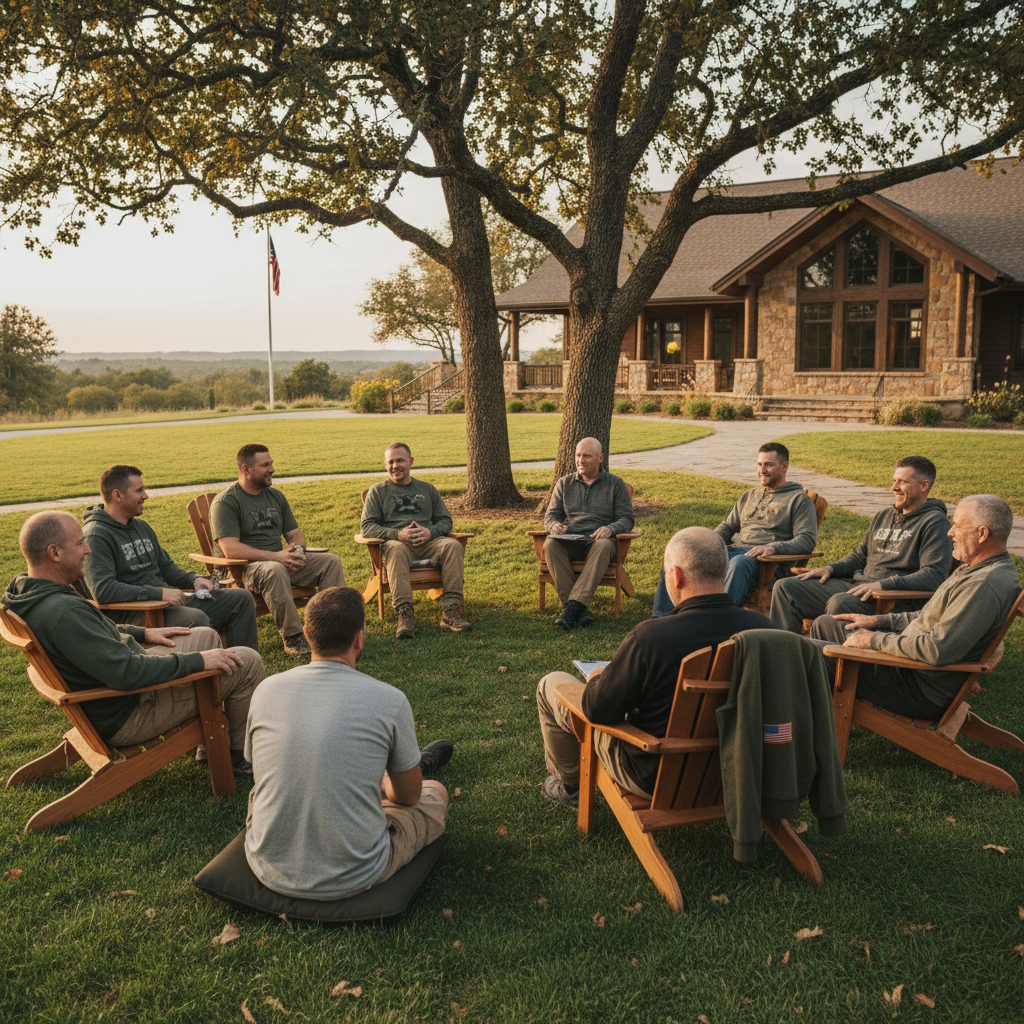
Why residential drug rehab for veterans matters
If you are a veteran or active duty service member, you know what it means to live with structure, accountability, and a clear mission. Addiction can strip that away, leaving you feeling disconnected from your values, your brothers in arms, and even from yourself.
Residential drug rehab for veterans gives you that structure back. In a 24/7, live‑in setting, you step out of the chaos of everyday triggers and into a focused environment where recovery is your primary mission. For many veterans, especially men who have completed detox but still feel unstable, this level of care is the safest and most effective way to reset.
The Department of Veterans Affairs operates about 250 residential drug and alcohol rehab programs at around 120 sites across the country, including Alaska and Hawaii, with capacity for more than 6,500 veterans at any time [1]. These programs reflect how critical residential treatment is for veterans living with substance use and co‑occurring conditions like PTSD and depression.
At Recovery Bay Center, the men’s military rehab program is built to mirror the structure and camaraderie you are used to, while also addressing the trauma, stress, and moral injury that often sit underneath addiction. You are not just “another client.” You are treated as a veteran with specific experiences that deserve respect and specialized care.
If you are looking for a residential rehab for veterans that understands your background, it helps to know what to look for and how to decide with confidence.
Understand your needs and timing
Before you choose any residential drug rehab for veterans, you need clarity on where you are in your recovery process and what level of support you actually need.
Know where you are in the treatment timeline
If you have been using alcohol, opioids, benzodiazepines, or other substances heavily, you may have already completed or scheduled detox. Residential rehab is usually the next step after detox, not a replacement for it.
Inpatient rehab for veterans is designed to provide 24/7 care in a residential or hospital setting, where medical staff can help you manage withdrawal, stabilize your health, and begin structured therapy [2]. If you have just completed detox and are worried about slipping back into old patterns, moving directly into a structured residential setting can help you stay on track.
If you are active duty or recently separated, you may also need a program that can coordinate with your command, your family, and your existing healthcare providers. A veteran inpatient treatment program that offers this continuity can reduce stress and confusion during admission and discharge.
Recognize co‑occurring mental health needs
You might be dealing with more than substance use. Many veterans live with PTSD, depression, anxiety, or traumatic brain injury. In 2022, about 1.4 million veterans had both a mental illness and a substance use disorder [2]. Ignoring one while trying to treat the other rarely works for long.
When you consider a residential program, ask whether it can treat:
- PTSD and trauma related to combat or service
- Depression, anxiety, or panic attacks
- Insomnia, nightmares, or hypervigilance
- Anger, guilt, and moral injury
VA residential programs use evidence based therapies like cognitive behavioral therapy (CBT), medications for alcohol, opioid, and tobacco use disorders, and access to mutual help groups such as Alcoholics Anonymous and SMART Recovery [1]. A high quality civilian program that focuses on veterans and military men should offer similar integrated care, not a one size fits all model.
If your use involves both substances and alcohol, look for centers that specialize in alcohol and drug rehab for veterans rather than only one or the other.
Look for veteran focused residential features
Not every inpatient facility is equipped to support military men. A strong residential drug rehab for veterans will feel different from a generic program the moment you walk in.
Structure that feels familiar
You are used to routine and expectations. Recovery Bay’s men’s military rehab program is intentionally structured, not chaotic. Your days follow a predictable rhythm:
- Set wake up and lights out times
- Scheduled therapy and group sessions
- Designated times for physical training or movement
- Clearly defined responsibilities and expectations
VA residential rehabilitation treatment programs use structure and a whole health approach to help you regain self care, independence, and personal responsibility [1]. A comparable civilian program should also give you clear daily routines that support stability rather than leaving you to fill time on your own.
If you know you do best when the day is planned and purposeful, a structured rehab program for veterans is likely a better fit than a loosely organized center.
Brotherhood and peer support
Serving in uniform means you understand brotherhood, accountability, and having someone’s back. Addiction often isolates you from that, which can make everything feel worse.
Veteran specific inpatient programs often use peer based therapy groups to build trust and understanding among participants [2]. In a men’s only, military friendly environment, you are surrounded by others who also know the culture, language, and unspoken expectations of service.
At a dedicated men’s military rehab center like Recovery Bay, you can talk openly about deployment, combat, chain of command, or transition without needing to explain every detail. That shared understanding often speeds up the therapeutic process because you are not starting from zero.
Trauma informed and military aware care
You did not develop a substance use disorder in a vacuum. Service related experiences, injury, loss of comrades, reintegration challenges, and family strain often play a role.
Veteran specific inpatient rehab programs frequently include staff who are veterans themselves or who have specialized training in veterans’ issues, and they deliver integrated treatment for substance use and mental health disorders such as PTSD, depression, and anxiety [2].
When you evaluate a program, ask:
- Do any staff members have military backgrounds or specific training in military culture
- Are clinicians experienced in treating PTSD, MST, moral injury, or combat trauma
- Is there a clear policy about handling triggers related to noise, crowds, or authority
A military rehab program for men that can answer these questions directly is more likely to meet your needs than a general population center.
Understand length of stay and levels of care
Another key part of choosing residential drug rehab for veterans is understanding how long you may need to stay and what the step down plan will look like.
Typical time in residential treatment
In VA residential rehab programs, the typical length of stay is around six weeks, although it can range from a few weeks to several months depending on your treatment needs [1]. This flexibility allows for different levels of severity, co‑occurring conditions, and personal goals.
Recovery Bay Center offers programs that can be tailored in length, especially if you are looking for long term rehab for veterans who need more time to stabilize, build new skills, and repair relationships.
When you speak with admissions, ask:
- What is the typical length of stay for someone with my history
- How does the team decide when I am ready for discharge
- Is there an option to extend if I am making progress but not ready to leave
Planning for continuity after discharge
Residential rehab is not the end of recovery, it is the foundation. A strong veteran rehab program for men will build your next steps into your plan from the beginning.
You might transition to:
- Intensive outpatient treatment
- Weekly individual or group therapy
- Peer recovery groups such as AA, NA, or SMART Recovery
- VA services or community based organizations
SAMHSA’s National Helpline can also provide referrals to local treatment facilities, support groups, and community based organizations in your area if you need more options after discharge. You can call 1 800 662 HELP (4357) or text your ZIP code to 435748 (HELP4U) for confidential assistance [3].
Verify TRICARE and military insurance coverage
Cost should never be the reason you do not get care, but it is often one of the biggest worries. If you rely on TRICARE or other military related insurance, you need a program that understands how to work with your coverage.
Why TRICARE compatible rehab matters
With the passage of the MISSION Act, veterans can access inpatient rehab through approved non VA community care providers, and these services can be covered by insurance carriers such as Optum and TRICARE in addition to VA healthcare [2].
A rehab that is already familiar with authorizations, documentation, and communication with military insurers can save you time and stress. When you contact a program, ask directly about:
- Their status with TRICARE and other military connected plans
- Any out of pocket costs you might face
- How they coordinate with your existing VA or military healthcare providers
If you are specifically searching for tricare inpatient rehab for veterans or tricare covered rehab for military, you want this information early, not after admission.
Using national helplines and VA resources
If you are unsure where to start, SAMHSA’s National Helpline is a free, confidential resource that operates 24 hours a day in English and Spanish. It does not provide counseling, but it connects you and your family to appropriate residential drug rehab and support services in your local area [3]. This includes referrals for uninsured or underinsured veterans to treatment facilities that offer sliding fee scales or accept Medicare or Medicaid.
The VA’s own residential rehabilitation treatment programs served more than 27,000 veterans in fiscal year 2024, and the average wait time from screening to admission has decreased to 16 days, five days shorter than the previous year [4]. If you are eligible for VA services, your local VA can help determine whether a VA program or a community program is the best fit.
Compare veteran specific treatment options
As you narrow down your choices, it helps to compare what different types of veteran programs actually offer so you can select the setting that matches your goals and circumstances.
| Program type | Who it serves best | Key features |
|---|---|---|
| VA residential rehab | Veterans eligible for VA healthcare who want integrated VA services | Whole health approach, structured 24/7 care, evidence based therapies, typical stay around 6 weeks [1] |
| Community veteran program | Veterans with TRICARE or private insurance who prefer non VA setting | Smaller census, flexible programming, often more privacy and tailored environment |
| Men’s only military rehab | Male veterans and active duty service members seeking brotherhood and structure | Gender specific treatment, peer support, military aware staff, emphasis on accountability and discipline |
Recovery Bay’s veteran men’s residential treatment sits in the third category, combining the benefits of residential structure with a tight knit, men’s only environment built around shared military culture. For many men, this mix creates a stronger sense of safety and belonging than a mixed gender, general population center.
Focus on dual alcohol and drug treatment
If you are like many veterans, your substance use does not fall cleanly into one category. You may drink heavily and also use opioids, stimulants, or sedatives. A residential drug rehab for veterans should be equipped to handle both, not ask you to choose which one “matters more.”
VA residential programs provide medication for alcohol, opioid, and tobacco use disorders and integrate those services into broader mental health and recovery work [1]. At Recovery Bay Center, your treatment plan can be tailored as:
- Residential alcohol rehab for veterans if alcohol is the primary issue
- Combined alcohol and drug rehab for veterans if you use multiple substances
- A step down from medical detox with continued monitoring and medication support when needed
Your team will track your withdrawal history, previous treatment attempts, and any medications you are taking so that your care is safe and coordinated, not fragmented.
Choose a men’s military rehab program built for you
Ultimately, you are looking for more than a bed and a schedule. You are looking for a place where you can rebuild discipline without shame, reconnect with brotherhood, and learn how to live sober while honoring your service and your values.
A strong men’s veteran addiction treatment program will:
- Respect your military identity rather than treating it as “just background”
- Provide structured days that feel purposeful, not punitive
- Offer trauma informed care that understands PTSD, moral injury, and reintegration stress
- Include other veterans and military men who can relate to your experiences
- Work with TRICARE or your military connected insurance when possible
If you are an active duty service member, a program that also understands inpatient rehab for active duty military requirements and communication protocols can reduce anxiety around career impact and confidentiality.
Recovery Bay Center’s men’s military rehab center is designed specifically for men like you. The environment is disciplined but supportive, structured but not rigid, and focused on helping you regain personal responsibility in a way that aligns with your training and values.
Take the next step with confidence
You do not have to navigate this decision alone. Between VA programs, community based veteran rehabs, and specialized options like Recovery Bay Center’s veteran rehab program for men, you have real choices.
If you want anonymous support while you explore those options, you can contact SAMHSA’s National Helpline at 1 800 662 HELP (4357) or text your ZIP code to 435748 (HELP4U) for a confidential referral to residential drug rehab and support services in your area [3].
From there, you can:
- Confirm your eligibility for VA or community care.
- Verify TRICARE or other insurance coverage for residential treatment.
- Decide whether a men’s only, military focused program like Recovery Bay’s military rehab program for men matches your goals.
You have already proven that you can commit to a mission under pressure. Entering residential drug rehab for veterans is not a sign of weakness. It is a decision to bring that same courage and discipline to your own recovery so you can move forward with clarity, stability, and a renewed sense of purpose.