
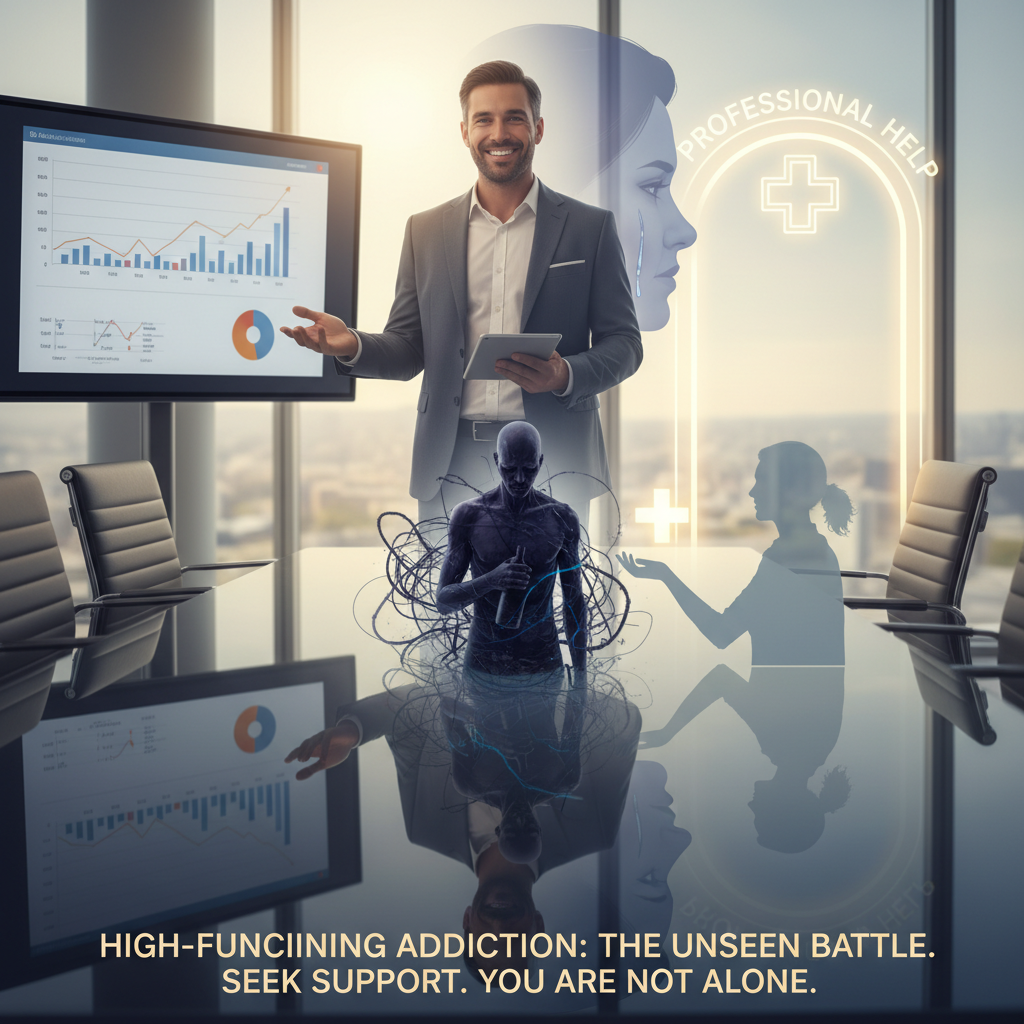
Understanding high functioning addiction
When you think of addiction, you might picture someone who has lost their job, their relationships, or their health. High functioning addiction looks very different. You can maintain work, pay your bills, show up for family events, and still be struggling with a serious substance use disorder behind the scenes.
Experts describe high functioning addicts as people who keep up daily responsibilities while being unable to stop using drugs or alcohol, often rationalizing their use despite harm to their lives [1]. You may excel at work, appear social and successful, and still feel like you cannot get through the day without using.
You might even question, “Am I really addicted?” If you are already asking that, resources such as am i addicted to drugs or alcohol can help you reflect more clearly on what is happening. Understanding key high functioning addiction signs is an important step toward deciding when to seek professional help.
Why high functioning addiction is often missed
High functioning addiction is easy to overlook, both for you and for the people around you. Because you appear to be doing well, it can feel like your substance use is under control, even when it is not.
Specialists in Toronto point out that many people with addictions continue to perform well at work. The term “high-functioning addicts” is often used to describe people who manage job responsibilities despite serious substance use, which means workplaces frequently miss early opportunities to intervene and reduce harm [2].
In fact, keeping your job can become a top priority, not because you are thriving, but because it funds your addiction. Over time, performance usually declines, which is why some clinicians prefer the term “currently functioning addict” instead of “high functioning addict” [2].
You might also see the impact at home long before work is affected. One expert warns that the idea of a “high-functioning user” is misleading because it focuses only on workplace function and ignores the serious damage addiction causes to families and children [2].
If you are trying to understand subtle or early warning signs more broadly, it can be helpful to explore the warning signs of substance use disorder. You may recognize more of yourself, or a loved one, than you expect.
Emotional and psychological warning signs
High functioning addiction is not just about how much you use. It also shows up in how you think, feel, and react to stress. Many of these changes are easy to explain away, yet they are some of the most telling high functioning addiction signs.
Growing denial and rationalization
One of the strongest indicators is how you talk to yourself about your use. People with high functioning addiction commonly deny and rationalize their substance use by blaming stress, anxiety, or other external factors. This pattern makes it easy to avoid facing the problem and also makes it harder for others to recognize what is going on [1].
You might notice yourself saying things like:
- “I work hard, so I deserve this.”
- “If my stress went down, I would not need to drink or use.”
- “Everyone in my field uses something to unwind.”
- “I cannot be addicted. I never miss work.”
If you find yourself constantly justifying your use, you may be using these explanations to protect the addiction, not yourself.
Mood swings and irritability
High functioning addiction often brings emotional ups and downs. You might feel:
- Irritable or on edge when you cannot use.
- Anxious before situations where using will not be possible.
- Relieved or overly relaxed once you start using.
- Depressed or guilty afterward, especially if you promised yourself you would cut back.
These mood shifts can strain relationships and make you withdraw, which can be early behavioral signs of addiction even if your life appears “together” on the surface.
Obsessive focus on the next use
You may be physically present at work or with family, but mentally focused on when you can drink or use next. High functioning addiction often includes:
- Planning your day around opportunities to use.
- Tracking how much of your substance you have left.
- Feeling restless or distracted until you know when you will get your next drink or dose.
This mental preoccupation is a sign that the substance has begun to take priority in your internal world, even if your external life still looks stable.
Behavioral and lifestyle changes
Your behavior and daily routines can reveal a lot about high functioning addiction. Many of these changes are subtle and unfold slowly, which is why they are easy to overlook.
Increasing secrecy and concealment
Individuals with high functioning addiction often go to great lengths to hide their use. You may notice yourself:
- Lying about how much or how often you use.
- Hiding bottles, pills, or paraphernalia.
- Using alone so others do not see how much you consume.
- Minimizing or laughing off concerns when someone asks about your use.
This secrecy helps you maintain the appearance of a successful and healthy lifestyle but also deepens isolation [1]. If you are trying to better understand these patterns in someone else, you might find how to recognize addiction in a loved one especially helpful.
Shifting priorities and subtle neglect
On paper, you might still be getting things done. Yet if you look closely, you may notice that responsibilities and hobbies are slowly losing ground to your use. Signs can include:
- Frequently being late or leaving early because of substance use.
- Showing up, but not fully engaged, at work or family events.
- Letting chores, bills, or personal projects slide.
- Dropping interests or hobbies that do not involve using.
Over time, you may find that more and more of your life revolves around people who use, situations where substances are present, or activities that allow you to recover from using.
Social changes and isolation
High functioning addiction can pull you in two directions socially. You might:
- Spend more time with people who use like you do.
- Withdraw from friends or family who might notice or question your use.
- Choose social settings that make it easy to drink or use heavily without standing out.
- Avoid invitations where substances will be limited.
These changes can be gradual and easy to justify. However, they often indicate that your addiction, not you, is steering your social life. For a broader look at how addiction presents in adults, you can review signs of drug addiction in adults.
Physical signs that often get overlooked
Because high functioning addiction does not always look dramatic, it is common to overlook physical changes. Yet your body often reveals what is happening long before your life “falls apart.”
Rising tolerance and withdrawal symptoms
People with high functioning addiction often develop an increasing tolerance. This means you need larger amounts to feel the same effect [1]. You might notice that:
- One or two drinks used to relax you, and now you need several.
- A dose that once felt strong now feels mild or “normal.”
- You switch to stronger substances or combine them to get the same relief.
Tolerance can be particularly dangerous if you stop for a while and then return to your previous amounts. Your body may no longer tolerate that level of use, which can increase the risk of overdose or other medical emergencies [1].
Alongside tolerance, you might experience withdrawal when you cut back or delay a dose. Symptoms can include:
- Shakiness, sweating, or headaches.
- Nausea, stomach upset, or loss of appetite.
- Anxiety, agitation, or restlessness.
- Difficulty sleeping or vivid, disturbing dreams.
If you recognize these changes, it may help to learn more about the physical symptoms of drug addiction so you can see how your experience compares.
Functional tolerance in alcohol use
If alcohol is your main substance, you might notice that you can drink larger amounts than others without “acting drunk.” This is known as functional tolerance. High functioning drinkers can sometimes perform daily activities normally while under the influence, because their bodies adapt to regular heavy use [3].
You might:
- Drink heavily and still appear calm, coordinated, and articulate.
- Use alcohol early in the day without others noticing.
- Drive or work after drinking because you feel “fine.”
Although this can make your use less visible, it does not protect you from the health risks of heavy drinking or from the possibility of an alcohol use disorder, which is a treatable chronic medical condition [3]. If you are unsure where you stand, exploring early signs of alcoholism in men can clarify how “functional” drinking may already be affecting your life.
Other physical red flags
High functioning addiction can also show up in more general health changes, such as:
- Unexplained fatigue or low energy.
- Changes in weight, appetite, or sleep.
- Frequent minor illnesses or slower recovery from colds and injuries.
- Bloodshot eyes, tremors, or subtle changes in coordination.
These symptoms do not prove addiction on their own. However, when they appear alongside changes in your use, mood, or behavior, they can be part of a larger pattern.
Work and achievement as a mask
A defining feature of high functioning addiction is that you keep many areas of life going, at least on the surface. Work, achievement, and financial stability can become powerful tools to convince yourself, and others, that your use is not a problem.
Overachievement and perfectionism
High functioning addicts often prioritize success, achievement, and maintaining financial stability over physical and mental health. Hyper productivity and perfectionism can become coping mechanisms to mask addiction and avoid suspicion from others [1].
You might notice that you:
- Work longer hours than necessary, then drink or use to “come down.”
- Take on more responsibilities to prove you are fine.
- Tie your self-worth to productivity and professional recognition.
- Use achievements to justify or excuse your substance use.
This pattern can be especially common in high stress fields. Occupations with long hours, intense pressure, or easy access to substances, such as medical work, law enforcement, emergency services, military, hospitality, and entertainment, are considered higher risk for functional addiction [4].
When work performance begins to slip
Although you may function well for a long time, most high functioning addictions eventually affect work. Experts note that visible signs at work represent only a small fraction of the overall problem, because colleagues and supervisors often overlook issues until performance declines significantly [2].
Subtle shifts can include:
- More mistakes or lapses in judgment.
- Slower thinking or reduced concentration.
- Increased sick days or “mental health days.”
- Tension with coworkers or supervisors.
If you notice these changes, it is important not to wait until there is a serious incident, job loss, or disciplinary action. Addiction specialists emphasize that people usually enter treatment only after relationships, health, or legal issues become severe, even though earlier support can reduce harm and improve outcomes [2].
Impact on relationships and home life
While high functioning addiction can stay hidden at work for some time, your closest relationships often feel the impact earlier. Sometimes you may not fully see this, because denial and rationalization are strong. Listening to the feedback of people who care about you can be an important reality check.
You might notice that:
- Loved ones say you are “not yourself” when you drink or use.
- Arguments often happen around your substance use.
- You promise to cut back but do not follow through.
- Important events are overshadowed because you were intoxicated or recovering.
Family members and friends are encouraged to have open discussions with people they are concerned about and to encourage counseling or medical help, especially when the person appears to function well and denies having a problem [3]. If you are on the other side of this, wondering how to approach someone you care about, you may find guidance in how to tell if someone needs rehab.
When high functioning becomes high risk
High functioning addiction often gives you a false sense of safety. You might feel that as long as you are holding everything together, your use is manageable. Yet behind the scenes, addiction is a progressive condition. The brain and body adapt over time, and the risks increase, even if you still appear “fine.”
Here are some signs that your high functioning addiction has moved into a more dangerous phase:
- You experience withdrawal symptoms if you stop or cut back.
- You have had blackouts, memory gaps, or periods you cannot fully remember [4].
- You have driven, worked, or cared for children while under the influence.
- You have had minor accidents, injuries, or close calls related to your use.
- Loved ones have expressed serious concern multiple times.
- You feel unable to relax, socialize, or cope with stress without using.
You may also notice more frequent or severe mental health symptoms, such as anxiety, depression, or panic, when you are not using. These can be signs that the addiction and your emotional health are closely linked, which may make it even harder to stop on your own.
If you are seeing several of these patterns, it can help to compare what you are experiencing with the broader behavioral signs of addiction. You might discover that your situation fits more of the criteria for a substance use disorder than you realized.
Deciding when to seek professional help
One of the hardest parts of high functioning addiction is knowing when your use has crossed the line. Because you are still meeting many responsibilities, you may feel you should be able to handle it alone. However, you do not need to wait for a crisis to get help.
Questions to ask yourself
The following questions can help you decide whether it is time to reach out for support:
- Have you tried to cut back or quit and found that you could not, or that you quickly returned to old patterns?
- Do you spend more time, energy, or money on substances than you intended?
- Do you feel anxious, restless, or unwell when you cannot use?
- Have your relationships been strained by your substance use, even if you are still functioning in other areas?
- Are you using substances to cope with emotions, stress, or past experiences that you are not addressing in other ways?
If you answer “yes” to several of these, it may be time to consider at least an evaluation. You can learn more about what that decision can look like at when to seek treatment for addiction.
What early intervention can look like
Treatment for high functioning addiction does not always require immediate inpatient rehab, especially when issues are identified early. For example, mild alcohol use disorder may sometimes be managed in outpatient settings by primary care doctors as part of a structured substance abuse treatment plan. This can include behavioral therapy, medications to reduce cravings, and education about managing stress and triggers [3].
Effective support might include:
- Talking with your primary care provider about your use honestly.
- Meeting with an addiction counselor or therapist.
- Participating in outpatient or intensive outpatient programs.
- Considering medication assisted treatment if appropriate.
- Attending peer support groups.
If you are not sure which level of support fits your situation, exploring how to tell if someone needs rehab can provide more clarity about how professionals match people with the right type of care.
High functioning addiction is still addiction. You do not need to lose everything before your struggle is taken seriously, and you deserve support even if the outside of your life still looks intact.
Taking your next step
Recognizing high functioning addiction signs in yourself or in someone you love can feel unsettling. At the same time, awareness is a powerful turning point. It means you no longer have to rely on secrecy, minimization, or “handling it alone.”
From here, you might choose to:
- Keep track of your substance use and notice patterns more honestly.
- Share your concerns with a trusted friend, family member, or professional.
- Schedule an appointment with a medical provider to discuss your use.
- Learn more about warning signs of substance use disorder to better understand your risk.
- Use resources such as signs of drug addiction in adults to see how your experience compares to common clinical signs.
You do not have to wait until your life visibly “falls apart” to ask for help. High functioning does not mean low risk, and seeking support early can protect your health, relationships, and future.