Why men’s veteran addiction treatment needs a different approach
If you are a veteran or active duty service member living with substance use, you are not alone. More than one in ten U.S. veterans have been diagnosed with a substance use disorder, a rate slightly higher than the general population, and young male veterans have even higher rates than their civilian peers [1].
Military culture, combat exposure, chronic pain, and the pressure to stay “mission ready” all shape how you cope with stress. Alcohol abuse and binge drinking are common during active duty and often continue into civilian life, which increases health risks and shortens life expectancy for many veterans [2].
Men’s veteran addiction treatment at Recovery Bay Center is designed around these realities. You receive care that respects your service, understands your training, and addresses trauma, pain, and mental health alongside alcohol and drug use.
If you have already completed detox or are preparing for it, Recovery Bay’s men’s military program can be your next structured step after stabilization. You move from simply getting substances out of your system to rebuilding your life with support, accountability, and a team that understands military values.
Understand how service impacts addiction
Your military experience affects how and why you use substances. When treatment does not recognize this, it is easy to feel misunderstood or judged.
Invisible wounds and self‑medication
Many veterans live with post‑traumatic stress, anxiety, depression, and moral injury. PTSD in particular is closely tied to substance use, and many veterans turn to alcohol or drugs to calm intrusive memories, numb emotions, or sleep, which can worsen pre‑existing use issues over time [2].
You might notice patterns like:
- Drinking or using to fall asleep or keep nightmares away
- Using before social events or crowded places
- Relying on substances to “turn your brain off” after work
Over time, this self‑medication can become a primary coping tool, then a dependency. Effective men’s veteran addiction treatment does not simply ask you to stop. Instead, it helps you understand what you have been trying to manage and gives you healthier ways to handle it.
Chronic pain and prescription opioids
Two‑thirds of veterans report living with pain and more than 9 percent report severe pain, which is higher than in the general population [1]. From 2001 to 2009, opioid prescriptions in the Veterans Health Administration rose significantly, and overdose rates among veterans increased in the years that followed [1].
If you were injured in training or combat, you may have been prescribed opioids for legitimate reasons. Over time, tolerance can build and you might find yourself using more than prescribed, mixing with alcohol, or seeking similar effects elsewhere. Recovery Bay’s program addresses both the pain and the addiction, so you do not have to choose between suffering physically and staying sober.
Alcohol, drugs, and unit culture
Veterans entering treatment report alcohol as their most frequently misused substance, at a rate nearly double that of the general population [1]. You may have been introduced to heavy drinking or other substances as part of unit bonding or “blowing off steam” after high‑stress operations.
In Recovery Bay’s residential setting, you work with professionals who recognize how these norms develop and how they follow you home. This helps you build a new peer group and new rituals of connection that do not revolve around alcohol or drugs.
What you can expect at Recovery Bay Center
When you enter a men’s veteran addiction treatment program at Recovery Bay Center, you step into a residential environment where structure and support are non‑negotiable. You are not left to figure things out on your own.
If you are comparing programs, you may also want to review the broader options for residential rehab for veterans and how they differ from standard civilian programs.
A structured day that restores discipline
Military life gives you a strong foundation in routine. Addiction often erodes that structure. Recovery Bay helps you rebuild it with a predictable schedule that balances clinical work, peer support, and rest. A typical day may include:
- Morning check‑ins and goal setting
- Individual therapy and trauma‑informed sessions
- Group therapy with other veteran and military men
- Physical activity, mindfulness, or holistic practices
- Evening reflection groups or relapse prevention work
This type of structured rehab program for veterans aligns with the discipline you are used to, without trying to turn treatment into basic training. Instead, it uses structure to reduce chaos, lower anxiety, and keep you focused on the mission of recovery.
Male‑only, veteran‑focused environment
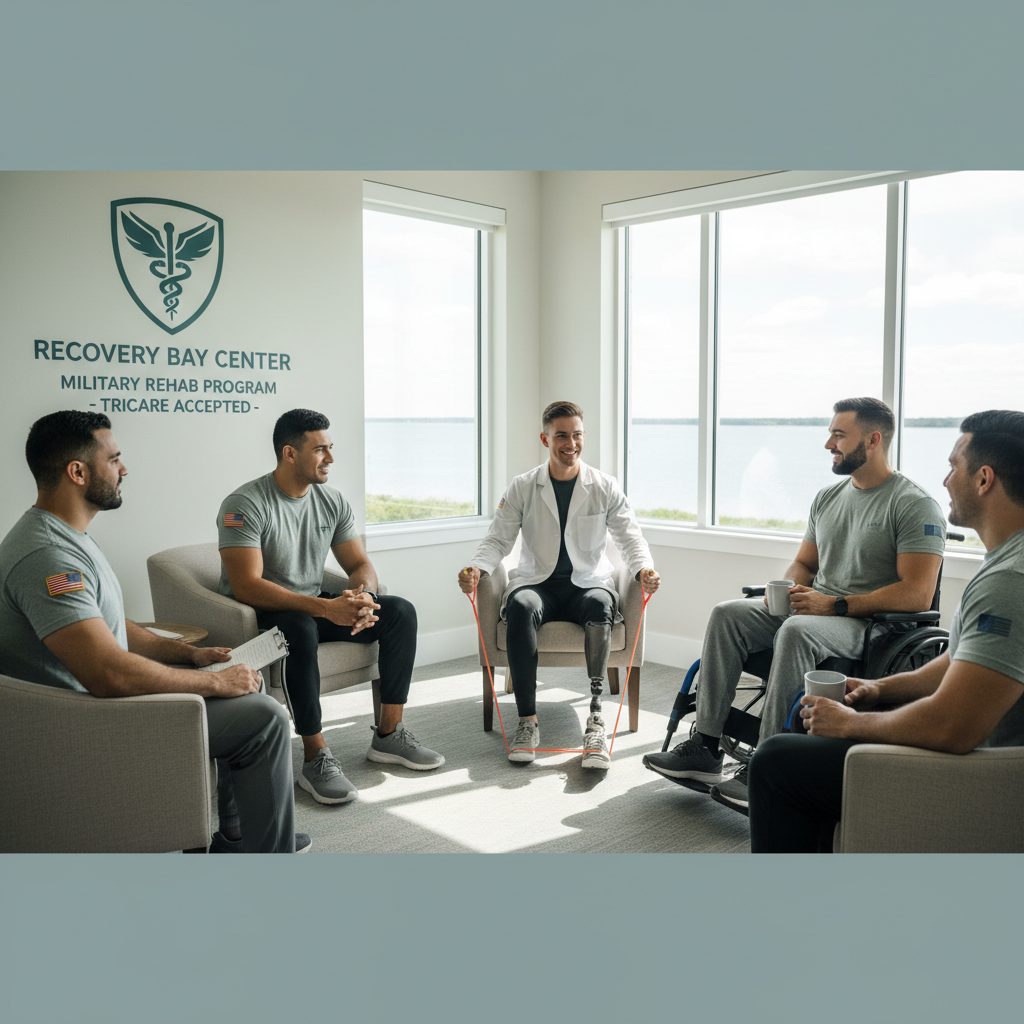
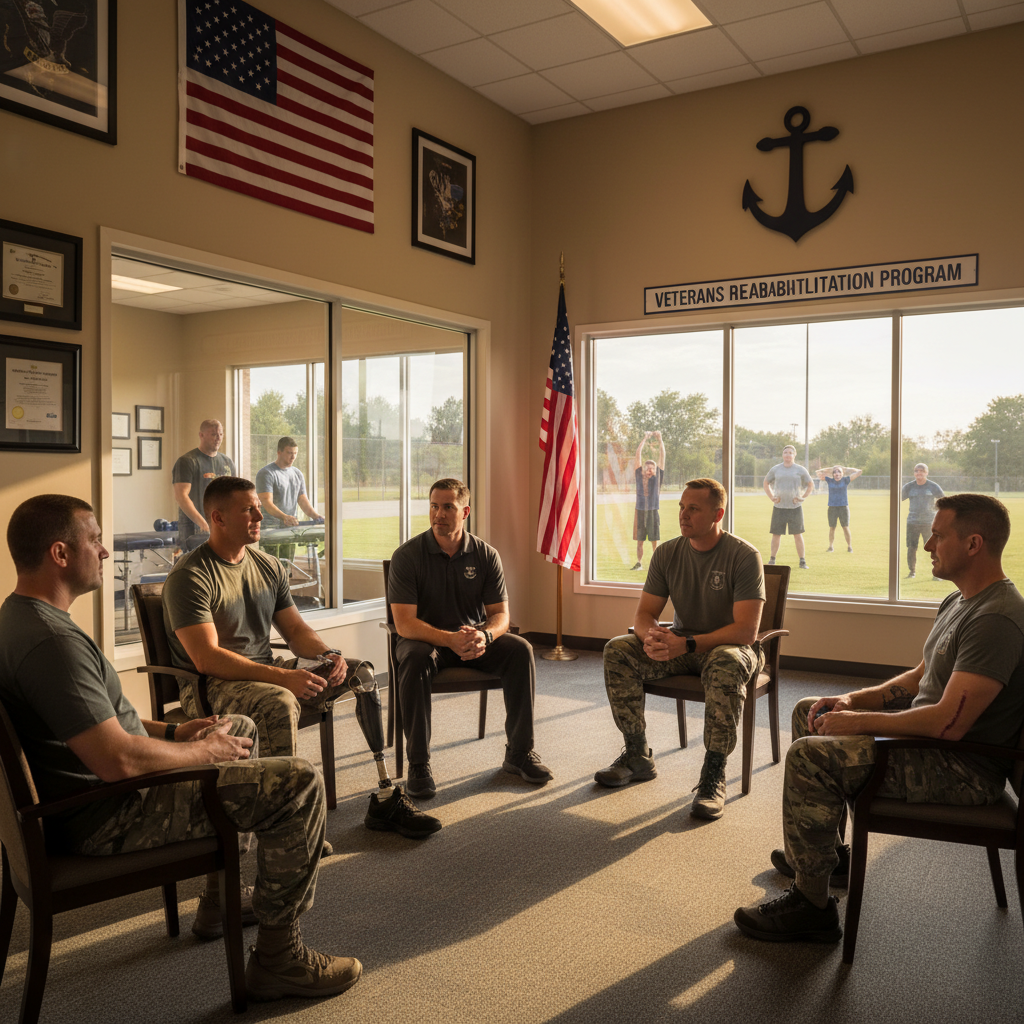
Sharing space only with other men, especially those with service backgrounds, removes many of the social barriers that can keep you guarded. At Recovery Bay you are surrounded by peers who know what it is like to deploy, to come home different, or to struggle with reintegration.
This focus on veteran men’s residential treatment helps you:
- Speak openly about combat, loss, guilt, and fear
- Confront beliefs about masculinity, strength, and “toughing it out”
- Build camaraderie and mutual accountability
- Practice vulnerability in a setting that still feels familiar and respectful
You are not expected to perform or explain the basics of military life. Staff and peers already understand the context of your experiences.
Continuity from detox to residential care
If you have just completed medical detox, the transition into residential care is critical. You may still feel physically and emotionally raw. Recovery Bay is designed as a next step after initial stabilization so that momentum is not lost between phases of care.
You move from focusing on withdrawal management to:
- Addressing triggers and trauma
- Learning relapse prevention strategies
- Re‑establishing sleep, nutrition, and physical health
- Planning for ongoing support after discharge
If you are still exploring detox options, Recovery Bay can coordinate with appropriate facilities so you can enter residential treatment as soon as you are medically cleared.
Integrated treatment for alcohol and drugs
Many veterans do not struggle with just one substance. Alcohol, prescription medications, marijuana, and illicit opioids often overlap. Among veterans, marijuana is the most commonly used illicit drug, and a significant portion of veterans in treatment report heroin or opioid involvement [1].
Recovery Bay is equipped to handle both alcohol and drug use in the same treatment plan. You do not have to pick only one issue to address.
Alcohol use that has gone too far
If you notice that drinking has moved from “how you relax” to something that runs your life, specialized residential alcohol rehab for veterans can give you a reset. In a men’s program with a strong veteran focus, you work on:
- Understanding how alcohol affects sleep, mood, and trauma symptoms
- Identifying high‑risk situations, such as anniversaries, reunions, or certain social settings
- Re‑writing beliefs like “real men can handle their liquor” or “everyone drinks like this”
- Learning skills to handle conflict, boredom, and stress without alcohol
Alcohol use among veterans is common and heavily normalized. You are not the exception, and you do not have to wait until things completely fall apart to get help.
Drug use, opioids, and prescription misuse
For many veterans, pain, insomnia, and anxiety become entry points to prescription or illicit substance use. Recovery Bay’s approach mirrors what national experts recommend. It combines behavioral therapies with medications when appropriate for opioid use disorder, in line with the evidence that medication plus counseling is more effective than either alone [1].
If you are using opioids, benzodiazepines, stimulants, or other substances, residential drug rehab for veterans at Recovery Bay can help you:
- Safely step down from dependence in coordination with medical providers
- Address the pain or sleep problems that may have started your use
- Learn alternative pain management and coping strategies
- Build a relapse prevention plan that fits your real‑world triggers
This dual alcohol and drug focus makes Recovery Bay a strong choice if your substance use history is complex or has changed over time.
Evidence‑based, trauma‑informed therapies
Men’s veteran addiction treatment is most effective when it blends evidence‑based care with a deep understanding of trauma. Many veterans live with co‑occurring conditions like PTSD, anxiety, and depression, which dramatically increase the risk of substance use [2].
Core therapeutic approaches
At Recovery Bay Center, your treatment plan may include:
- Cognitive behavioral therapy to help you identify and change thought patterns that fuel substance use, guilt, or hopelessness
- Trauma‑informed therapies to work directly with combat trauma, military sexual trauma, or other service‑related events at a pace that feels safe
- Group therapy with other men where you can practice communication, accountability, and peer support
- Family‑focused sessions where appropriate, to rebuild trust and communication at home
These approaches reflect what leading veteran organizations recommend, namely that treatment should address addiction and mental health together, and that it must be tailored to the realities of military service and reintegration challenges [2].
Holistic and wellness‑focused supports
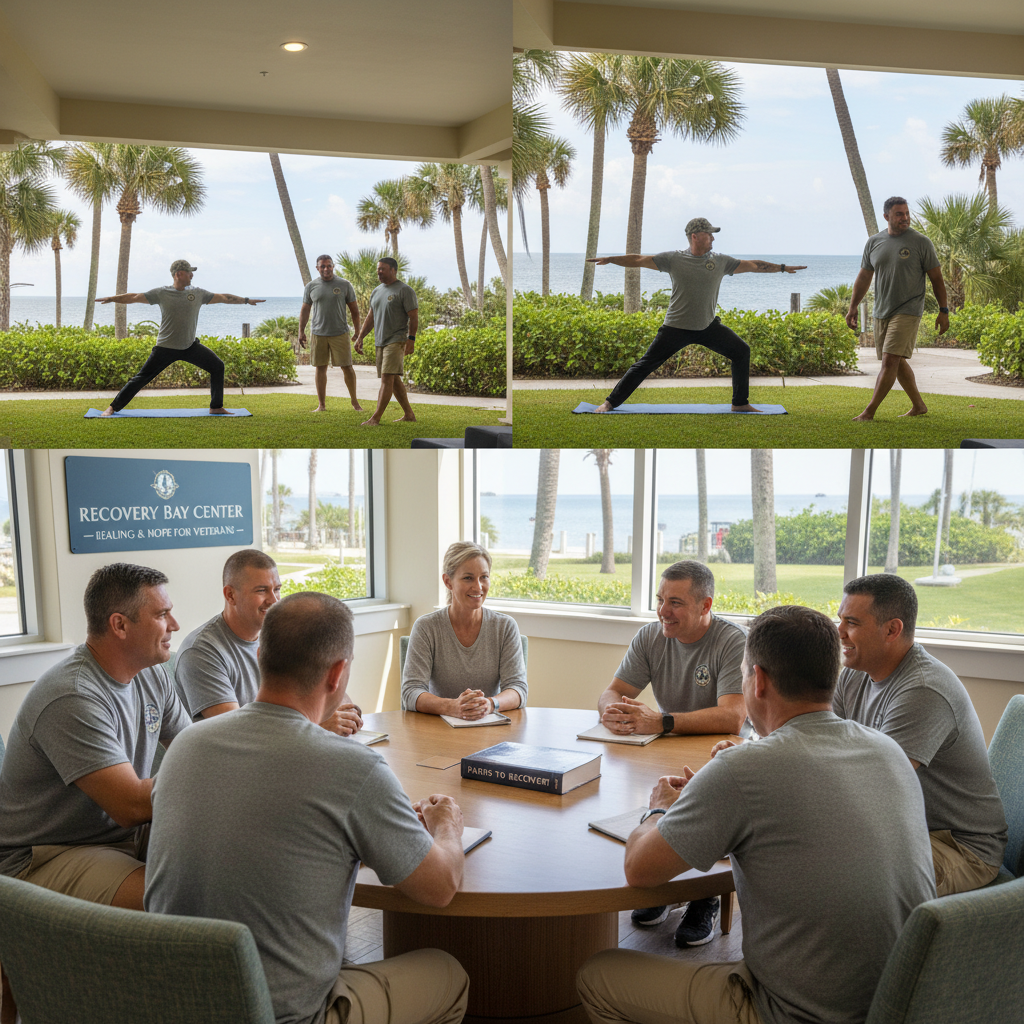
Alongside formal therapies, Recovery Bay integrates activities that support your body and nervous system, such as physical fitness, mindfulness, and other holistic practices. These help you:
- Lower baseline stress levels
- Improve sleep and energy
- Rebuild confidence in your physical capabilities
- Experience positive routine without substances
When your nervous system is calmer and your body is healthier, you have more capacity to engage in deeper emotional and psychological work.
Effective men’s veteran addiction treatment does not ask you to forget your service. It helps you carry what you have seen and done in a way that no longer requires substances to get through the day.
How Tricare and military insurance fit into your care
Cost and coverage can be major barriers to getting the help you need. Recovery Bay Center works with Tricare and other military‑related insurance plans so that you can focus on treatment instead of paperwork.
If you are looking for tricare inpatient rehab for veterans or tricare covered rehab for military, admissions staff can review your benefits, explain your options in plain language, and help you understand:
- What residential services your plan covers
- How long you might be approved to stay
- What your out‑of‑pocket costs might be, if any
- How coverage works if you are active duty versus separated
You do not have to navigate this alone. Financial and insurance clarity is part of the admissions process, not an afterthought.
Support for both veterans and active duty
Recovery Bay’s men’s military program welcomes both veterans and, when appropriate, active duty service members who need structured inpatient care. If you are still serving, you may be searching specifically for inpatient rehab for active duty military.
The team understands:
- Rank and confidentiality concerns
- The impact of treatment on your career and duty status
- How to coordinate with commanders or medical officers when necessary and appropriate
If you are already separated or retired, you may benefit more from a broader veteran inpatient treatment program that focuses on civilian reintegration, employment, relationships, and long‑term life planning after service. Recovery Bay helps you navigate both the internal and external changes that recovery requires.
Why a men’s military rehab program matters
You might wonder whether a standard mixed‑gender civilian program is enough. For some people it is. However, a dedicated men’s military rehab center like Recovery Bay offers specific advantages:
- Shared language and culture, so you do not have to translate your experience
- A focus on brotherhood and accountability that mirrors the best parts of military life
- Space to examine masculinity, strength, and vulnerability among other men
- Targeted work on reintegration stressors, chronic pain, and co‑occurring PTSD
If you prefer a setting that centers military experience, you can also explore the broader military rehab program for men offerings within the Recovery Bay continuum.
For some, especially those with a longer history of use or multiple relapses, long term rehab for veterans may be appropriate. Longer stays provide more time to stabilize, repair relationships, and build a solid aftercare plan.
What your path forward can look like
Everyone’s recovery path is different, but the broad stages at Recovery Bay Center often follow a similar pattern. Understanding them can help you decide whether this is the right fit.
-
Initial contact and assessment
You speak with an admissions specialist who understands military and veteran needs. They gather your history, current use, mental health concerns, and service background to see whether Recovery Bay is clinically appropriate. -
Insurance and logistics
Your Tricare or other coverage is reviewed. You get a clear picture of what is covered and what steps are required to begin. Travel and admission dates are coordinated. -
Detox coordination if needed
If you still need to complete detox, the team helps you connect to appropriate services so you can transition directly into residential care once medically cleared. -
Residential treatment
You enter Recovery Bay’s veteran rehab program for men, where you live on site, follow a structured daily schedule, and engage in intensive individual and group work. This stage focuses on stabilization, insight, and skill building. -
Planning after residential care
Before you discharge, staff work with you to build a realistic aftercare plan. This may include outpatient therapy, support groups, VA services, or community‑based resources. Depending on your needs, stepping down to other levels of alcohol and drug rehab for veterans may be recommended. -
Ongoing support and connection
Maintaining the sense of brotherhood you develop in treatment is important. You are encouraged to stay connected to peers, alumni resources if available, and community supports so you do not have to navigate post‑treatment life alone.
Reach out and take the next step
If you are reading this, you have already done something difficult. You have admitted that what you are doing now is not working and that you might need help.
Recovery Bay Center’s men’s veteran addiction treatment program is built around your strengths as a service member, your need for structure, and your right to respectful, trauma‑informed care. You do not have to choose between your identity as a veteran and your desire to get sober. Both can exist together.
Whether you are exploring veteran inpatient treatment for the first time, looking for a more military‑aligned setting, or trying to rebuild after relapse, you have options that honor your service and your future.
You can contact Recovery Bay today to ask questions, verify Tricare or other coverage, and talk through what residential care might look like for you. There is no obligation to commit on the first call.
You spent years showing up for others. You are allowed to show up for yourself now.